Controllers play an important role in smart compressors. That’s because any remote monitoring and control technology can only use advanced features if the compressor controller supports them. In other words, if a controller is limited to turning the machine on and off, then the remote technology won’t add more functionalities.
1. The individual compressor controllers themselves and,2. For operations with multiple compressors,a central controller that manages them all.
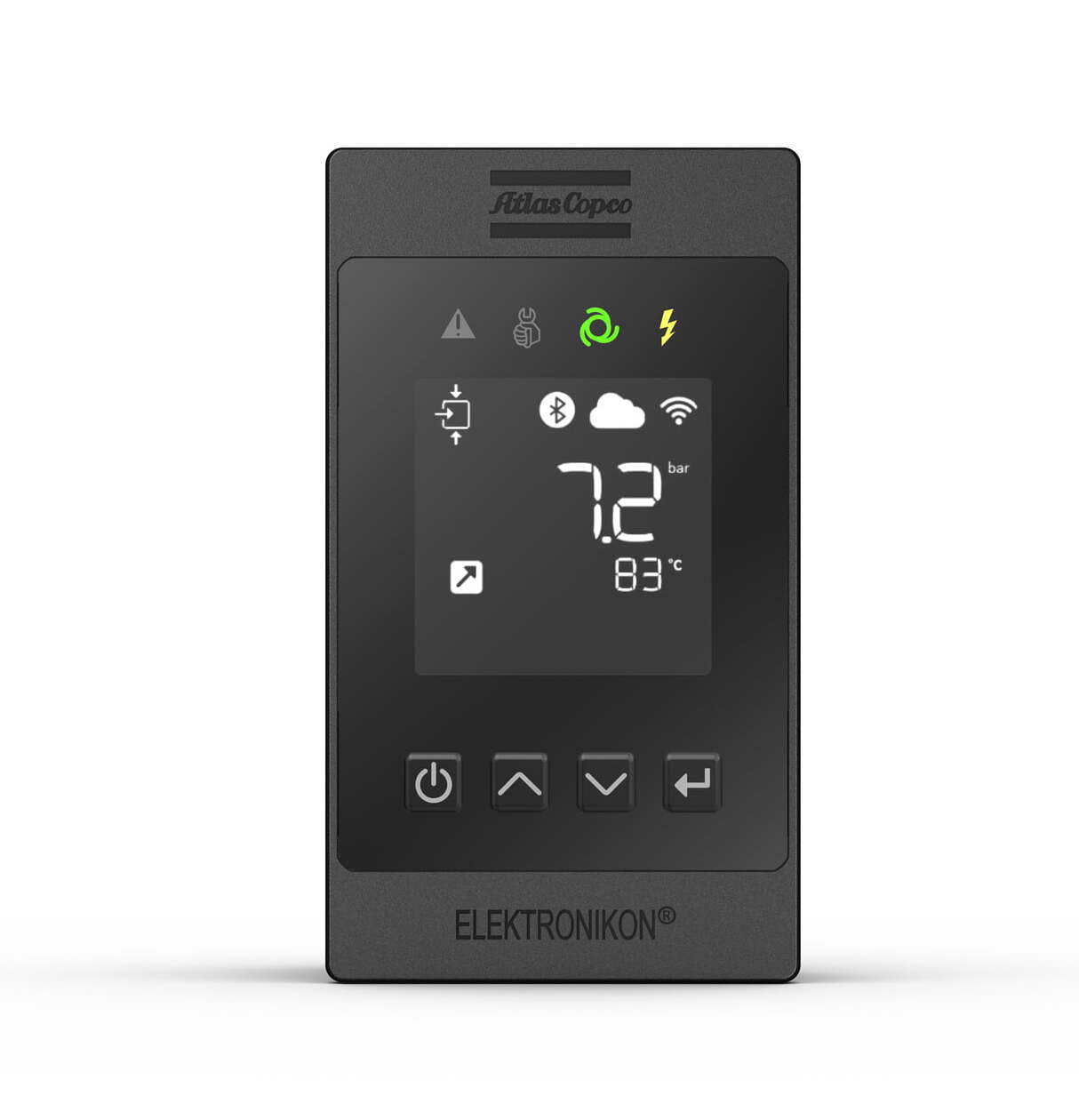
With regard to individual controllers, Atlas Copco recently took a major leap forward with the Elektronikon Nano™ for its professional G-range compressors. This revolutionary controller monitors 30 data points and summarizes the information clearly and concisely.
The Nano™ is extremely user friendly and entirely app controlled. With a wide range of innovative features, including air leakage detection, it helps optimize the compressor’s efficiency, uptime and lifetime.Perhaps its most groundbreaking technological advancement is one that takes full advantage of what connectivity has to offer. The Nano™ receives over-the-air updates, which means that it allows Atlas Copco G compressors to get better over time.
Contact an expert
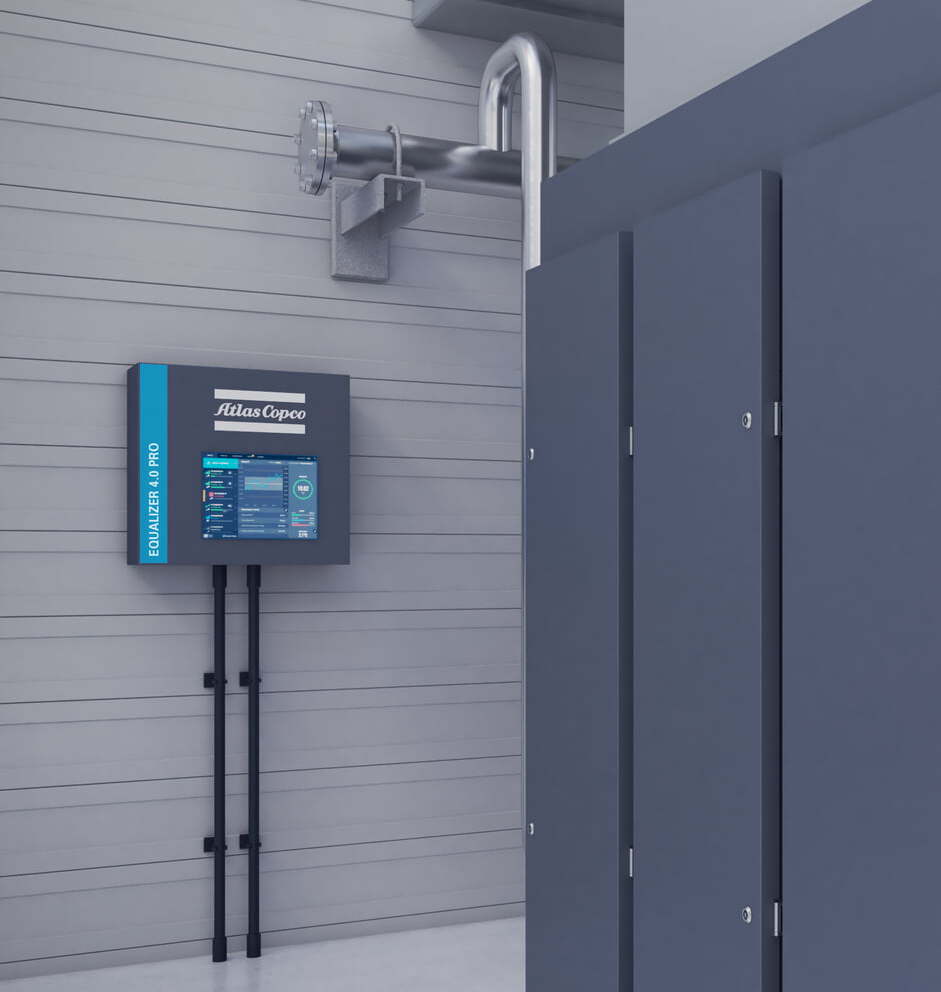
Controllers are also excellent examples of the impact smart technology can have on your production. They can coordinate the performance of all of your machines to ensure you get the most out of them.A smart central controller will let you distribute the workload across multiple compressors based on your priorities. It provides the best possible efficiency while ensuring you always have enough compressed air.Atlas Copco is offering two types of central controllers, the Equalizer 4.0 PRO and the Optimizer 4.0. For more on their respective benefits, just read on.
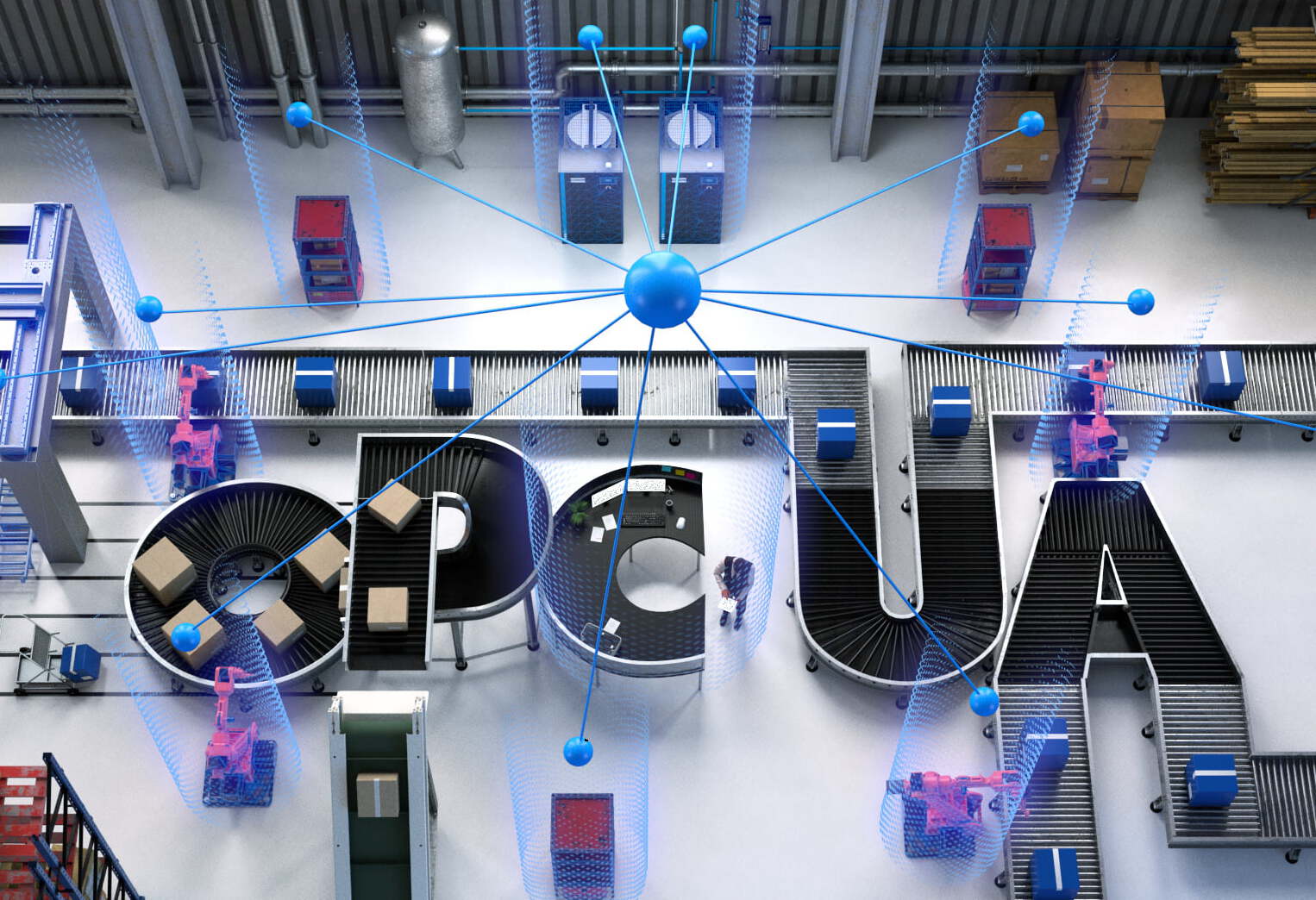
In the very near future, smart factories will largely be automated. Not just the compressed air systems, but the entire production. One of the requirements to make that happen will be a universal machine language that allows every piece of equipment to “talk” to each other.For example, an order for a product will be placed online and, right away, an injection molding machine will automatically be equipped with the right mold. It will then communicate to the compressor how much air is required and what air quality is needed.The finished products or end products are then automatically conveyed to a packing station, packaged and loaded onto a truck (which might be self-driving at that time). At the same time, any waste products are sent to recycling and the hot exhaust air from the compression process will be recovered and routed to where it is needed the most.For any of this to happen, all of the machines obviously have to be connected and “speak” a common language. And these languages already exist, for example OPC UA. This acronym stands for Open Platform Communications Unified Architecture. It is a machine-to-machine communication protocol developed specifically for industrial automation.
In a fully smart factory, OPC UA will be used to make all processes more automated and allow them to run more smoothly.If all of this sounds far-fetched, consider this: Atlas Copco, which has always been a pioneer in all connectivity-related technologies, has already developed the first compressor capable of “speaking” and understanding this language.